•
5 Mins Read.





Key Summary
Spain had 75% possession, 27 shots, and the world's No. 2 ranking. Cape Verde had one shot on target and a population of just 600,000. Yet when the final whistle blew, only one team felt victorious.
How can two teams walk away from the same 0-0 scoreline with completely opposite emotions? The article explores why expectations and narratives often matter more than outcomes themselves.
From football to boardrooms, market leaders and challengers play different psychological games. History shows that pressure and reputation can become liabilities, while belief can become an advantage.
The draw didn't change the scoreboard, but it changed something far more powerful. And once people begin to believe that the impossible is possible, entire organizations, and even nations, can start behaving differently.
On paper, this wasn't supposed to be competitive.
Spain entered the 2026 FIFA World Cup as reigning European champions, one of the tournament favorites, and the No. 2-ranked team in the world. Cape Verde, meanwhile, were making their World Cup debut. With a population of roughly 600,000 people and players scattered across eight different leagues, they represented one of the smallest nations ever to qualify for the tournament. By every conventional measure, the gap was enormous.
Ninety minutes later, the scoreboard read 0-0.
Spain had enjoyed nearly 75% possession. They had attempted 27 shots. Cape Verde managed only one effort on target. Spain dominated virtually every statistical category that analysts use to measure control. And yet, when the final whistle blew in Atlanta, one team walked away frustrated and the other walked away feeling as though they had won. Forty-year-old goalkeeper Vozinha, named player of the match, left the field in tears. For Cape Verde, this wasn't merely a draw. It was history.
Which raises an interesting question. How can two teams experience the same outcome so differently?


The answer lies in something leaders frequently underestimate. People don't judge outcomes in isolation. They judge them relative to expectations. And expectations are ultimately stories.
Spain's narrative entering the match was clear. They were expected to dominate. Victory was assumed. Anything less would feel like disappointment. Cape Verde's narrative was entirely different. Simply being present was historic. Competing was admirable. A draw against one of the world's elite teams would be remembered for generations. Identical result. Opposite emotions.
The same phenomenon appears constantly in organizations.
A company that grows revenue by 15% may disappoint investors if expectations were 20%. Another company growing at 5% may celebrate because expectations were lower. Two managers receive identical performance reviews, yet one feels devastated while the other feels validated. Boards approve a strategy, and six months later the exact same numbers produce either panic or optimism depending on what story management initially created around them.
Performance matters.
But performance relative to expectations matters more. This is one reason great leaders spend so much time managing narratives rather than merely managing outcomes.
Cape Verde's coach Bubista understood this instinctively. Before the tournament, he repeatedly framed qualification as something larger than football. It was about identity, culture, and proving that his country belonged on the world stage. His players weren't carrying the burden of winning the World Cup. They were carrying the opportunity to represent something bigger than themselves. When expectations are structured that way, pressure transforms into freedom.
Spain faced the opposite problem, as success creates expectations. Expectations create pressure and pressure creates caution.
And caution often produces the very outcomes organizations are trying to avoid.
Luis de la Fuente's side controlled possession with their usual precision, but possession itself eventually became a trap. The longer the game remained scoreless, the more anxiety crept into Spain's decision-making. Their passing became predictable. Their finishing deteriorated. Even the late introduction of Lamine Yamal failed to alter the story unfolding on the pitch. Afterwards, de la Fuente admitted his team lacked sharpness and freshness, acknowledging how difficult it had become to break down an opponent whose confidence increased with every passing minute. (Barca Blaugranes)
This dynamic should feel familiar to anyone who has spent time inside a boardroom.
Large incumbents often behave like Spain.
Market leaders dominate resources, talent, and market share. They control the conversation. They own the infrastructure. Yet the weight of expectation changes the way they make decisions. Mistakes become costly. Failure becomes unacceptable. Over time, preserving success starts to matter more than pursuing possibility.
Smaller challengers operate differently. Because they have less to lose. They experiment more aggressively. They embrace unconventional approaches. They play with fewer psychological constraints.
And occasionally, they remind everyone that the scoreboard doesn't care about reputations.
This is one reason disruption so often catches incumbents by surprise. Kodak possessed more resources than digital startups. Nokia had more scale than smartphone challengers. Blockbuster dwarfed Netflix. Yet incumbents are frequently fighting two battles simultaneously. They must compete against external rivals while also defending the expectations created by their own success. Challengers, meanwhile, have only one job.
To change the narrative. Perhaps the most fascinating aspect of the Spain-Cape Verde match was not the result itself, but the emotions it produced. Spain left asking what had gone wrong. Cape Verde left asking what might now be possible. Midfielder Laros Duarte openly spoke about qualifying for the knockout stages. Suddenly, a team that entered the tournament hoping to belong had begun imagining how far they could go.
Confidence works that way.
It compounds with belief, so do narratives. And leaders often underestimate just how powerfully those forces shape performance. Because teams rarely play to their capabilities, they play to their stories. Employees do the same. Organizations do the same, for that matter, even entire nations do the same.

This is why leadership is fundamentally an exercise in narrative construction. Numbers matter. Strategies matter. Talent matters. But beneath all of them lies a more fundamental question:
What do people believe is possible?
Martin Luther King Jr. understood this. So did George Marshall. So did Steve Jobs. Great leaders rarely begin by changing reality. They begin by changing the story people tell themselves about reality.
Cape Verde didn't defeat Spain. But they accomplished something that may ultimately matter more. They changed the story.
And once people start believing that something is possible, the impossible has a curious tendency to become merely difficult.
Previous

Leadership communication is more than public speaking or executive presentation skills. It is the ability to use language, silence, questions, and judgment to create clarity, credibility, and leadership presence when the stakes are high.
Next
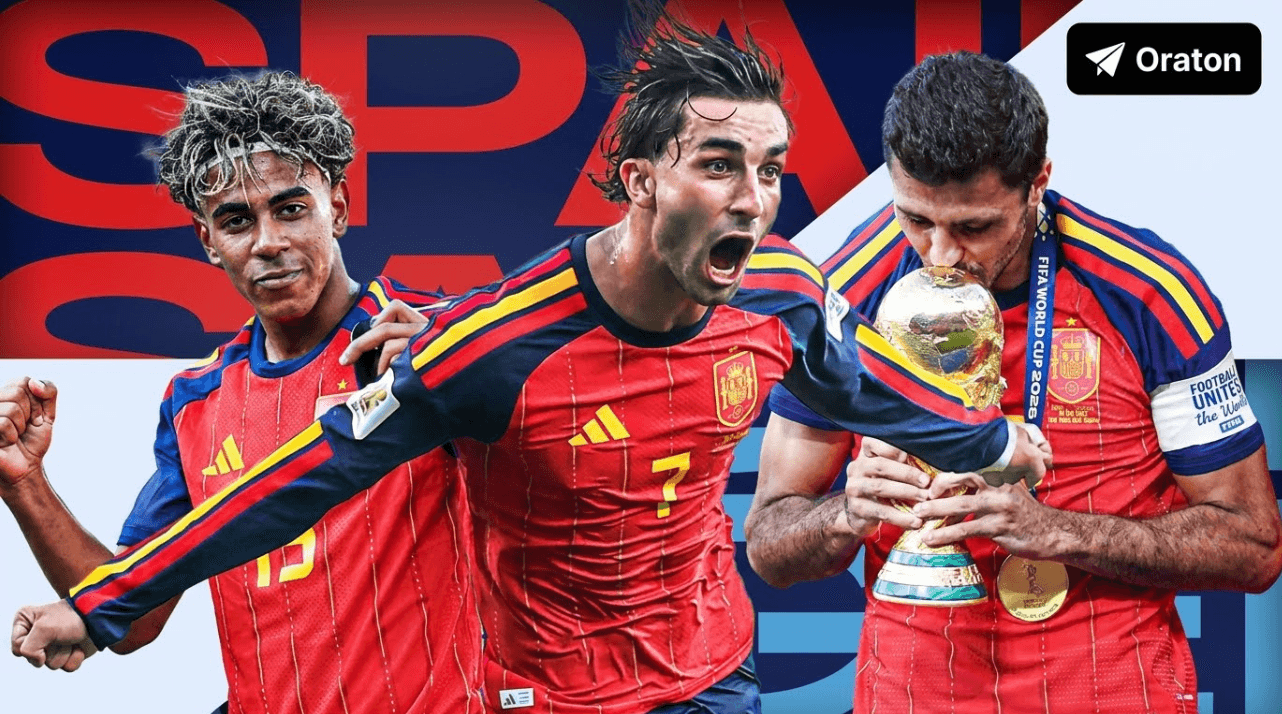
Spain didn't suddenly become world champions in 2026. They spent more than a decade building leadership, trust, and continuity until winning became the natural outcome.