•
5 Mins Read




Key Summary
Spain's 2026 World Cup victory wasn't built in the final, it was built over more than a decade. The article argues that sustained success is rarely the product of one extraordinary performance; it's the outcome of systems that quietly compound over time.
Luis de la Fuente's greatest advantage wasn't tactical genius, it was continuity. After nearly a decade leading Spain's youth teams before taking charge of the senior squad, he inherited relationships, trust, and shared understanding that most organizations spend years trying to create.
Research on succession planning, psychological safety, and team effectiveness reinforces the same lesson: organizations outperform when they develop leaders internally, preserve institutional knowledge, and create environments where coordination compounds faster than individual talent.
The real leadership lesson isn't about football, it's about organizational design. Great leaders don't chase breakthrough moments; they build systems that make breakthrough moments increasingly inevitable.
Every organization dreams of breakthrough moments.
The championship. The IPO. The record quarter or the breakthrough product.
The assumption is that extraordinary results are produced by extraordinary performances. Spain's 2026 World Cup victory suggests something different.
Extraordinary results are usually the visible consequence of systems that have been quietly compounding for years.
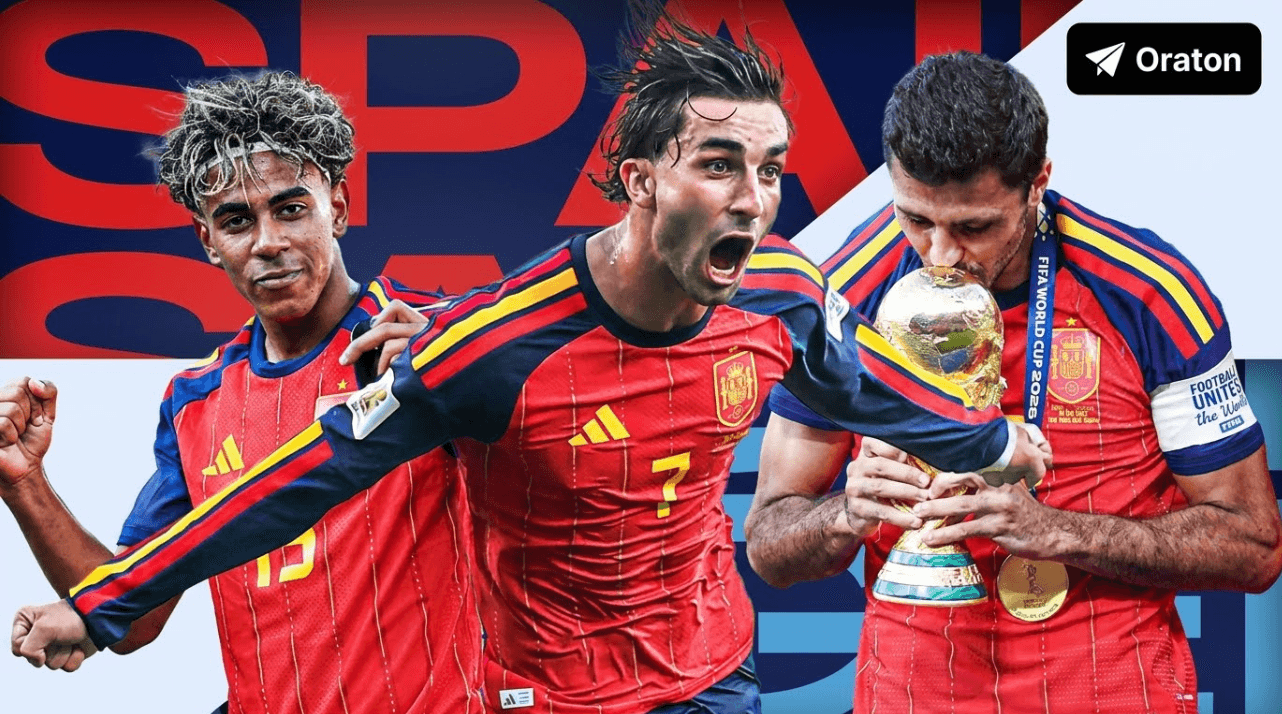
When Ferran Torres scored the winning goal against Argentina in the 106th minute of the World Cup final, it completed one of the most dominant international football cycles in modern history. Spain lifted its second World Cup after winning the UEFA Nations League in 2023 and the European Championship in 2024, extending its unbeaten run to 38 matches and becoming the first nation to simultaneously hold the men's and women's World Cup titles. More remarkable than the trophy itself was how inevitable the victory felt. Spain controlled the final almost entirely, finishing with twenty shots while Argentina failed to register a meaningful attacking threat until the closing stages.
It is tempting to explain that dominance through a generation of exceptional players. Lamine Yamal, Pedri, Rodri, Nico Williams and Pau Cubarsí will rightly occupy the headlines for years to come. But focusing on talent alone misses the more important story. Great teams emerge everywhere. Great systems sustain them.
Spain's greatest competitive advantage was not its players.
It was continuity.
Luis de la Fuente became Spain's senior manager in 2022, but by then he had already spent almost a decade inside the Spanish Football Federation. Since joining in 2013, he had coached the Under-19s, Under-21s and Olympic team, winning European championships while working with many of the same players who would eventually become world champions. By the time Rodri, Oyarzabal, Fabián Ruiz and others reached the senior side, De la Fuente wasn't introducing himself to them. He already understood how they learned, how they responded to pressure and where they performed best. The senior team was less a new project than the final stage of one that had been under construction for years.
That approach stands in sharp contrast to how many organizations think about leadership.
When performance declines, boards often search for transformational outsiders. Football has historically behaved the same way. National federations regularly appoint famous managers after disappointing tournaments, hoping a new personality will produce immediate results. Sometimes it works. More often, it creates another cycle of short-term experimentation.
Spain invested in something less glamorous.
It invested in institutional memory.
Research on succession consistently shows that organizations with robust leadership pipelines outperform those that rely primarily on external appointments. Studies from leadership advisory firms including DDI and Russell Reynolds Associates have repeatedly found that companies with structured internal succession processes report stronger long-term financial performance, higher executive retention and smoother strategic transitions because institutional knowledge compounds instead of resetting every time leadership changes.
Sport rarely receives the same analysis, but the principle is identical.
De la Fuente inherited neither strangers nor an unfamiliar culture. He inherited relationships he had been developing for nearly a decade.
That continuity produced something statistics struggle to measure.
Trust.
High-performing teams do not emerge simply because talented individuals spend enough time together. Harvard professor Amy Edmondson's research on psychological safety demonstrates that sustained performance depends on environments where people trust one another enough to communicate openly, admit mistakes and adapt collectively under pressure. Those conditions rarely appear overnight. They accumulate through repeated interactions, shared experiences and consistent leadership.
Spain's football reflected exactly that.
Against France in the semi-final and Argentina in the final, the players rotated positions instinctively, trusted teammates to occupy space without instruction and maintained tactical discipline even when matches became emotionally charged. Rodri completed more passes than any player in World Cup history, while Spain conceded only one goal throughout the tournament, reflecting not only technical quality but extraordinary collective coordination.
Businesses often underestimate how difficult that kind of coordination is to build.
Google's landmark Project Aristotle, which examined more than 180 teams, concluded that team effectiveness depended less on assembling exceptional individuals than on creating conditions that allowed those individuals to perform collectively. Psychological safety, role clarity, dependability and shared purpose consistently outweighed raw talent as predictors of performance.
Spain demonstrated the same principle on football's biggest stage.
Its stars mattered, but the system mattered more.
Perhaps the most overlooked aspect of Spain's triumph is how patiently it was built.
Modern organizations increasingly operate under quarterly expectations. Coaches are dismissed after one disappointing season. CEOs are expected to demonstrate transformation within months. Investors reward visible action more readily than invisible capability-building.
Spain resisted that pressure.
Instead of rebuilding every tournament cycle, it allowed ideas, relationships and leadership to compound. The World Cup was simply the first moment the rest of the world noticed what had already been happening for years.
There is an important distinction between achieving success and engineering success.
One depends on moments.
The other depends on systems.
Leaders often celebrate breakthrough outcomes while paying far less attention to the structures that make those outcomes repeatable. Yet history repeatedly suggests that sustainable excellence rarely arrives through dramatic interventions. It emerges from environments where capability compounds faster than competitors realize.
Spain's second World Cup was won in New Jersey.
Its competitive advantage, however, was built quietly across training grounds, youth academies and dressing rooms long before the final ever began.
Like the strongest organizations, Spain discovered that championships are rarely created under the brightest lights.
They are accumulated, one carefully developed leader at a time.
Championships aren't built on match day. Neither is leadership.
At Oraton Executive Communication Coach, leaders rehearse the conversations that compound into stronger teams, better decisions, and lasting results.
Previous

Spain dominated every statistic, but Cape Verde left with the momentum. The match offers a surprising lesson about leadership, expectations, and why narratives often shape performance more than talent.
Next

The hardest part of responsible AI isn't writing the framework. It's building an organization capable of testing AI in reality, learning from failure and knowing when humans need to intervene.