•
6 Mins Read




Key Summary
84 million Americans watched the first Clinton-Trump debate, but its biggest lesson had little to do with policy. What unfolded revealed two completely different theories of influence.
Despite winning many post-debate scorecards, Hillary Clinton's information-heavy approach failed to leave the same lasting imprint. The article explores why certainty often beats complexity in uncertain times.
Psychologists have studied the "illusory truth effect" for over 50 years. The findings help explain why repetition and emotional clarity can outperform expertise itself.
From presidential debates to boardrooms, the same communication mistake keeps repeating. The leaders who shape decisions are not those who know the most.
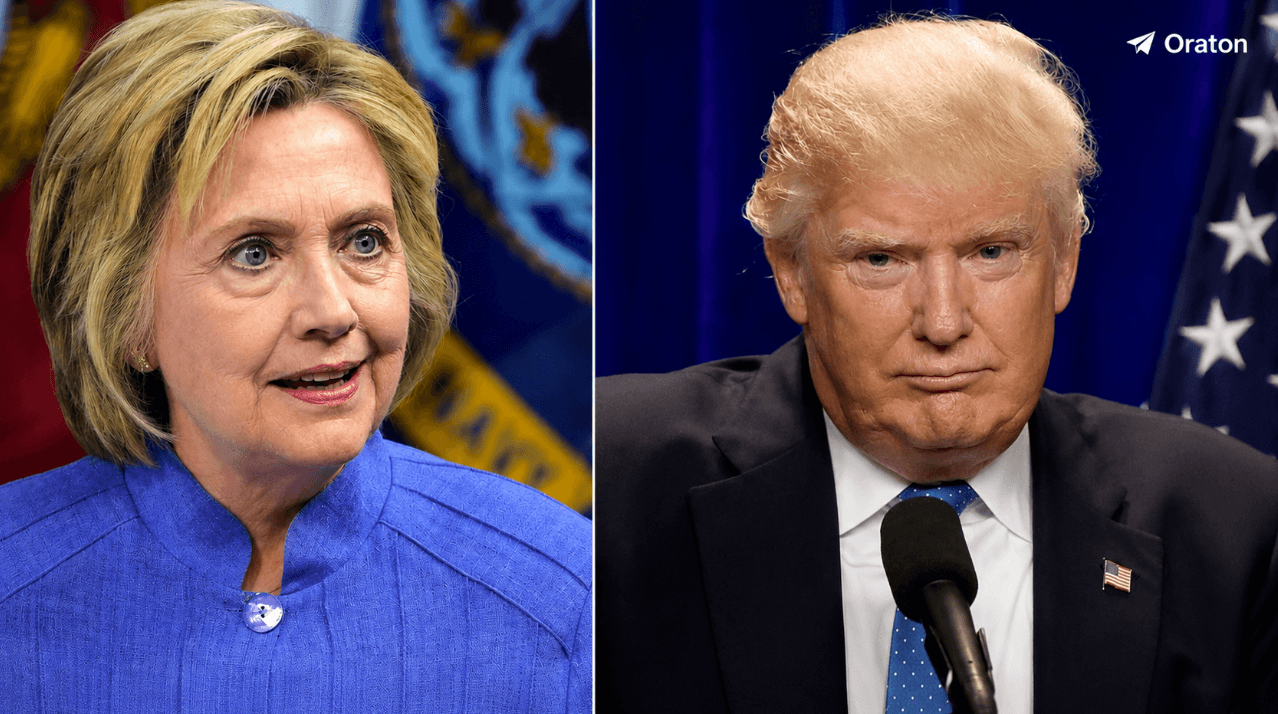
84M+ Americans tuned in to watch the first presidential debate between Hillary Clinton and Donald Trump in September 2016, making it one of the most watched debates in American history. At that time, most post-debate analysis focused on policies, fact-checks, and who had "won" according to conventional standards. Pundits dissected tax plans, trade policies, and economic proposals. Polls suggested Clinton had delivered the stronger performance. She appeared composed, knowledgeable, and disciplined. Trump appeared improvisational, combative, and frequently willing to abandon policy details altogether. Yet about 8 years later, the debate is remembered not because it settled policy arguments, but because it revealed something deeply uncomfortable about influence itself..
The assumption among educated professionals is that persuasion follows knowledge..that better facts should produce better decisions, stronger arguments should defeat weaker ones and moreover expertise should very surely command authority. This belief underpins entire professions. Lawyers are trained to build cases, while consultants are trained to support recommendations with analysis, meanwhile the engineers are rewarded for precision.
Executives spend literally years..learning how to master complexity.
Clinton's debate strategy reflected precisely this worldview: Her answers were rich with specifics, qualifications, examples, and evidence. She frequently cited experts, defended policy details, and expanded upon complicated subjects with the kind of nuance that many organizations associate with competence.
Trump, on the other hand, appeared to be operating according to a completely different theory of communication: He rarely seemed interested in matching Clinton point for point. Instead, he returned repeatedly to the same themes. America was losing. Jobs were disappearing. Politicians had failed. Trade agreements were unfair. Leadership was weak. Viewed through the lens of traditional debate norms, the approach often appeared chaotic. Viewed through the lens of psychology, however, it reflected a surprisingly sophisticated understanding of how people process uncertainty. Human beings rarely remember information the way experts expect/want them to.
Cognitive specialists have long known that the brain prefers simplicity over complexity, stories over statistics, and emotional coherence over analytical completeness. The illusory truth effect, first identified in the 1970s and confirmed repeatedly since, shows that repetition itself increases believability. Statements become easier to process. Familiarity creates comfort. Comfort becomes credibility. Whether consciously or instinctively, Trump's communication style leaned heavily into these mechanisms. Clinton assumed that voters would synthesize information into conclusions whereas Trump supplied the conclusions directly.
That distinction is more important than it probably appears, right now. Information requires a lot of effort. Whereas conclusions? It provides relief. During periods of uncertainty, relief often matters more than detail. This helps explain why some leaders are remembered despite saying relatively little, while others are forgotten despite saying considerably more. Clinton's answers frequently grew more nuanced when challenged.
Trump often became simpler. Clinton expanded. Trump compressed. Clinton added context. Trump added certainty.
One style reflected intellectual rigor. The other one reflected emotional clarity. The implications extend far beyond politics. Boardrooms are filled with versions of this dynamic. Executives routinely walk into meetings armed with fifty slides of market analysis, operating assumptions, and performance metrics. Their presentations are thorough, logical, and technically sound. Yet directors are rarely suffering from a lack of information. In most cases, they are overwhelmed by it. What they are searching for is interpretation. They want to know what the numbers mean, to understand what matters most. Someone to absorb complexity and return with clarity. In other words, they are looking for judgment.
This is where many technically brilliant leaders struggle. Their instinct is to share their analysis. But audiences do not pay leaders to transfer information. They pay leaders to reduce uncertainty. The difference sounds subtle, but it changes everything. An executive who begins with market segmentation, customer cohorts, and competitive dynamics may possess extraordinary expertise. Another executive who says, "Our competitive position is deteriorating and we have eighteen months to respond before we begin losing meaningful share," may be saying essentially the same thing. But the second executive has done something the first has not. They have performed the synthesis. They have transformed information into meaning. We believe, that is why the 2016 debate remains such a fascinating communication case study. Clinton and Trump were not simply advocating different policies. They were solving different psychological problems. Clinton assumed voters wanted answers. Trump assumed they wanted certainty. Clinton optimized for completeness. Trump optimized for coherence. Clinton behaved like someone trying to win an argument. Trump behaved like someone trying to occupy attention.
None of this means facts are unimportant or that charisma inevitably triumphs over substance. Reality eventually punishes leaders who substitute confidence for competence. Markets expose fantasies. Organizations will, similarly, expose empty or hollow rhetoric. Expertise STILL matters. Preparation does play a HUGE role. But influence and expertise are not identical skills, and one of the uncomfortable lessons of 2016 is that many accomplished professionals mistake them for the same thing.
The deeper subject for leaders here is not meant to be political at all. It is purely psychological..as humans rarely reward the person who knows the most. They reward the person who makes complexity feel manageable. Boards want clarity, employees want confidence and investors want a coherent explanation of the future. Your customers? they want reassurance that someone understands the chaos around them.
People do not follow leaders because those leaders possess the greatest volume of information. They follow leaders because those leaders help them make sense of a world that feels increasingly difficult to understand.
And in environments defined by uncertainty, that ability may matter even more than being right.
Previous

Data transformation rarely fails because companies don't have enough data. It fails because nobody has enough authority to turn that data into better decisions.
Next

Learn when hedging language builds credibility and when it weakens your message. Discover how executives, researchers, and business leaders use certainty and caution to communicate more effectively.