•
10 Mins Read.





Leadership lessons do not always come from business books, executive programs, or management seminars.
Sometimes they come from movies.
That may sound surprising. Films compress years of organizational conflict into two hours and often turn complicated leadership decisions into memorable scenes. But that compression is precisely what makes movies useful as leadership case studies. They make behavior visible.
A film can show what happens when a leader's attitude affects a team, when a manager fails to communicate expectations, when a founder makes a consequential choice, or when a group succeeds because people with different strengths learn to work together.
The point is not that every movie character represents a model leader. Some of the most useful leadership lessons come from characters whose behavior should not be copied.
What matters is the behavior, its consequences, and the principles underneath it.
Here are 10 leadership lessons from movies that remain relevant to managers and executives.
1. Lead by Example: Remember the Titans
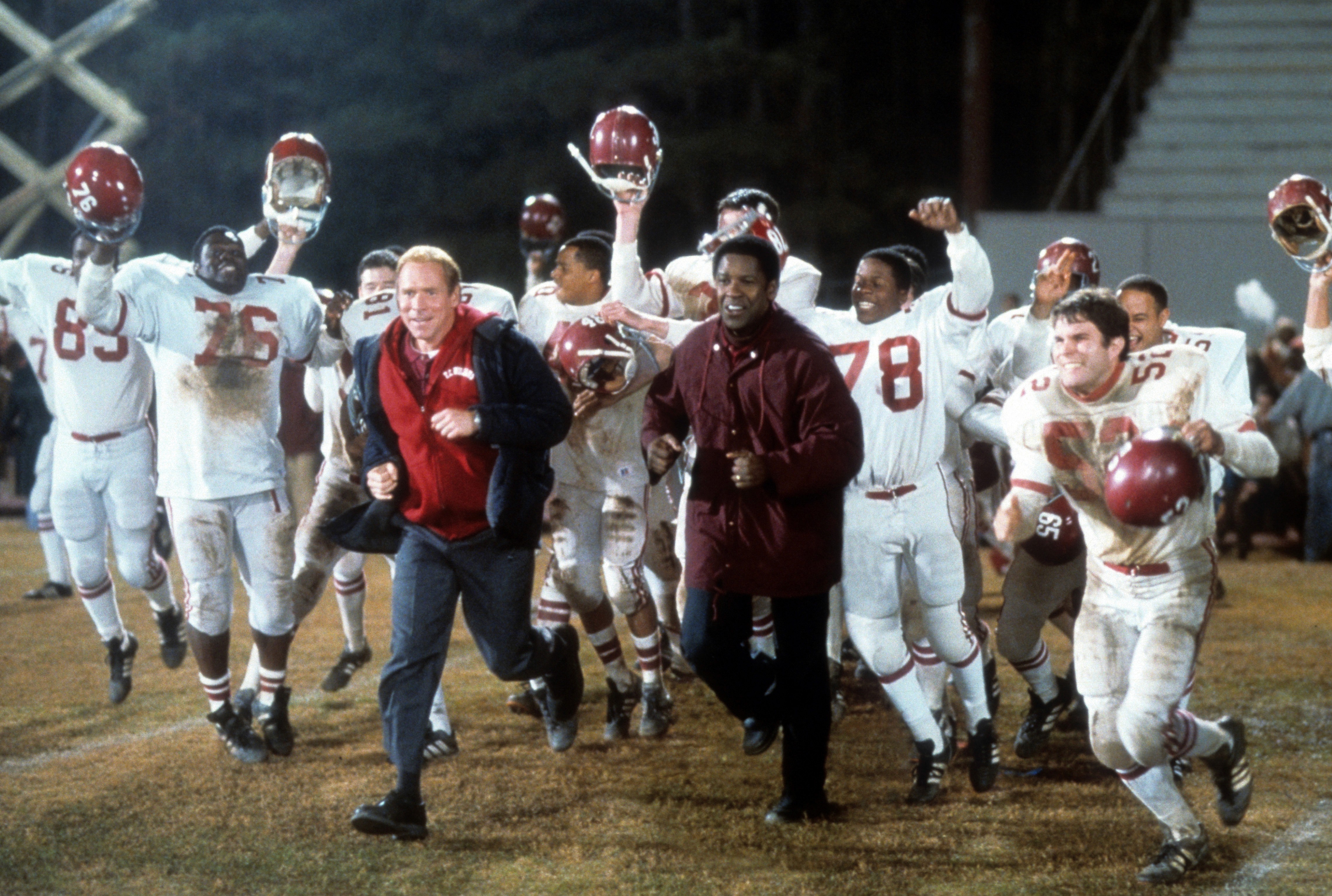
“Attitude reflects leadership, Captain.”
Remember the Titans (2000), based on the story of a newly integrated high school football team, offers an immediate lesson in the relationship between a leader's behavior and a team's culture.
In one of the film's most memorable exchanges, Julius Campbell challenges Gerry Bertier by connecting his attitude to the example being set by those in charge.
The underlying principle extends far beyond sport.
Employees watch leaders for signals about what is acceptable. They notice how a manager reacts to pressure, how an executive treats a difficult customer, whether a leader admits mistakes, and whether the standards communicated to the team are also applied to the person at the top.
Culture is therefore shaped not only by what leaders announce, but by what they repeatedly demonstrate.
A leader who asks for calm while reacting emotionally to setbacks sends two different messages. A leader who asks for accountability while shifting blame creates the same contradiction.
Leadership lesson: Your team's behavior will often reflect the behavior you tolerate and model. Before asking what your team needs to change, examine what your own behavior is teaching them.
2. Remember the Journey: The Pursuit of Happyness
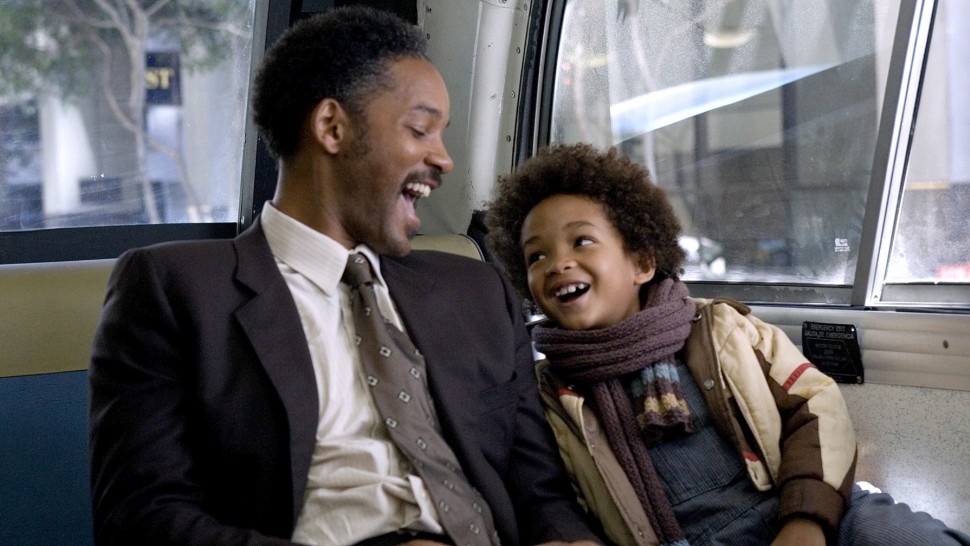
“You got a dream… you gotta protect it.”
The Pursuit of Happyness (2006) follows Chris Gardner through financial hardship, homelessness, and an opportunity to build a different life.
The film's leadership lesson is less about individual triumph than about persistence and perspective.
As careers progress, it becomes easy for successful leaders to forget the conditions that shaped their early decisions. The uncertainty of the first promotion disappears. The anxiety of proving yourself disappears. The mistakes made before you had authority become distant memories.
That distance matters.
Leaders who remember what it felt like to be inexperienced may communicate differently with people who are still learning. They may be more patient with questions, more deliberate with feedback, and more conscious of how much effort can be hidden behind an imperfect result.
Remembering the journey can also protect leaders from confusing their current position with their permanent identity.
Leadership lesson: Keep the difficult parts of your journey visible. They can make you more resilient as a leader and more empathetic toward people who are still finding their way.
3. Understand That Choices Shape Outcomes: The Social Network

The Social Network (2010) dramatizes the early development of Facebook and the conflicts surrounding its growth.
Its leadership lesson is straightforward: having a strong idea is only the beginning.
Once an opportunity appears, leaders have to make choices about speed, people, partnerships, control, priorities, and growth. Those choices gradually determine what an organization becomes.
This is particularly important for founders and senior executives because strategic decisions rarely arrive with a label saying, This is the decision that will define the company.
They often appear as ordinary choices:
Who should join the team?
Which opportunity should receive resources?
How quickly should the organization grow?
Which principle should not be compromised?
Which risk is worth taking?
Leadership is partly the accumulation of those decisions.
Leadership lesson: A compelling idea creates an opportunity. The choices that follow determine what happens to it.
4. Build the Right Team: Captain America: Civil War

In Captain America: Civil War (2016), the Avengers fracture into competing groups and recruit additional members.
Behind the superhero spectacle is a familiar organizational problem: capability is distributed across people, and performance depends on how those capabilities fit together.
Leaders sometimes recruit by looking for the strongest résumé, the most prestigious qualification, or the longest experience.
Those factors can matter. They are not the whole equation.
A strong team also requires complementary strengths, different perspectives, reliable judgment, and people who can operate effectively with one another.
The best hire for a team is not necessarily the most impressive individual in isolation. It may be the person who adds a capability the team currently lacks.
Leadership lesson: Hire for the capability your team needs, not simply for the résumé that looks strongest on paper.
5. Empower People to Own the Outcome: Any Given Sunday
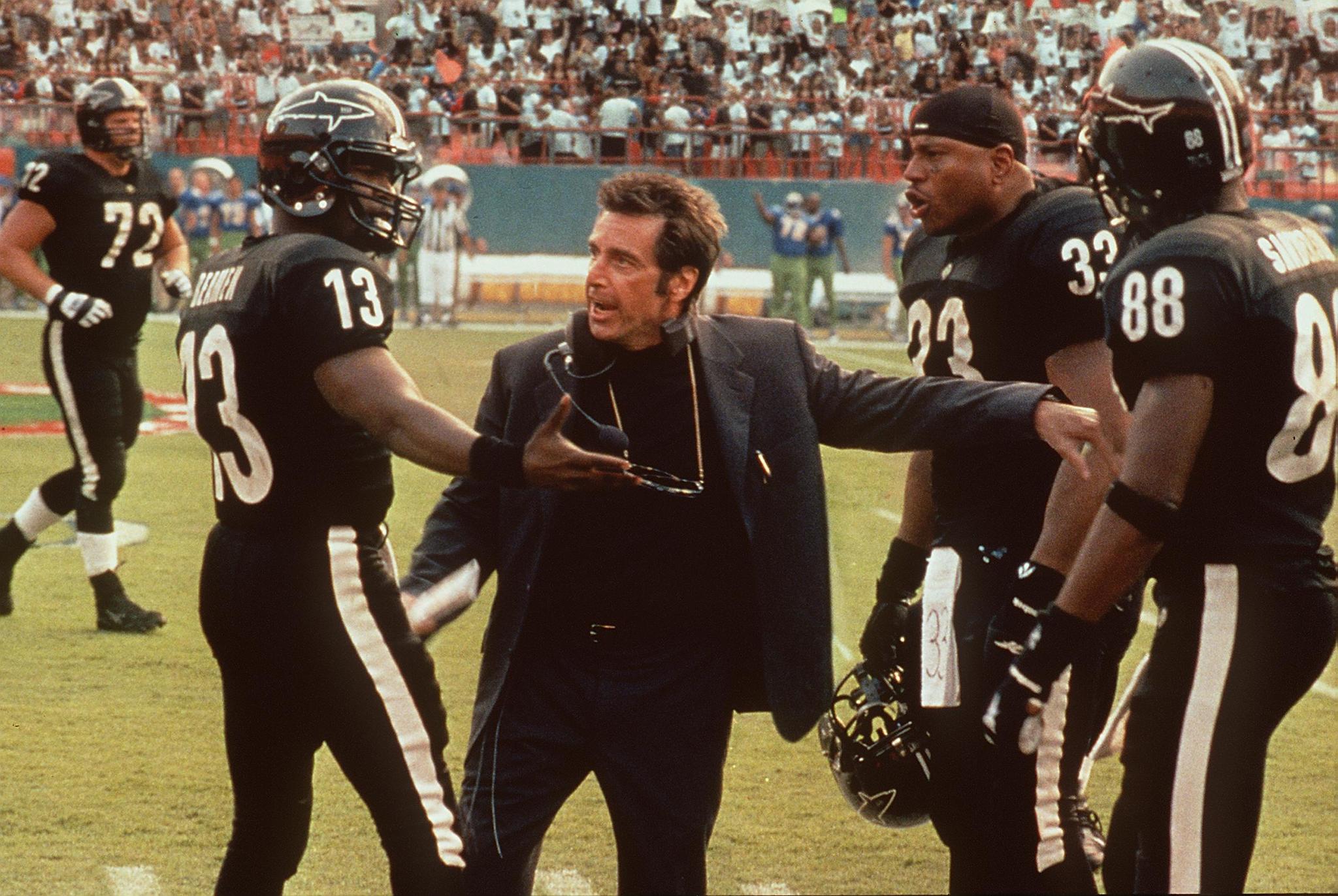
“I can’t make you do it.”
In Any Given Sunday (1999), coach Tony D’Amato eventually makes an important distinction between what a leader can control and what the team itself must own.
A leader can provide tactics, resources, training, feedback, and direction. At some point, however, the people doing the work have to make decisions themselves.
This is one of the central tensions of management.
Too little direction creates confusion, too much creates dependency.
Empowerment sits between the two.
Effective leaders provide the context, tools, standards, and boundaries people need to succeed, then allow them enough ownership to exercise judgment.
This becomes increasingly important as organizations grow. A leader who insists on making every decision eventually becomes a bottleneck.
Leadership lesson: Give people the tools and clarity they need, then give them meaningful ownership of the outcome.
6. Learn From People Who Know Something You Don't: The Internship

The Internship (2013) follows two experienced salespeople who enter an internship program at Google and find themselves competing alongside much younger, technically sophisticated participants.
The film reverses an assumption that often appears in workplaces: that expertise belongs to the person with the most senior title or the longest résumé.
In reality, experience and new knowledge can complement one another.
A senior employee may understand customers, negotiation, organizational dynamics, and relationships. A younger colleague may bring technical fluency, different cultural references, or a new way of approaching a problem.
Strong leaders do not need to be the most knowledgeable person in every room.
They need to create conditions in which useful knowledge can move through the room.
That requires curiosity, humility, and the willingness to ask questions without worrying that the question itself will reduce authority.
Leadership lesson: Treat expertise as distributed. Your job is not to know everything. It is to make sure the organization can access what it knows.
7. Recognize and Reward Performance Responsibly: The Wolf of Wall Street

The Wolf of Wall Street (2013) presents an extreme version of incentive-driven sales culture through the rise of Jordan Belfort.
There is an important leadership lesson here, but it is not that every form of high-energy motivation should be copied.
The film illustrates the power of recognition, incentives, group identity, and visible rewards in shaping behavior. It also illustrates the risks when performance incentives become detached from ethical boundaries.
Leaders therefore have two responsibilities.
First, recognize genuine contribution. People need to know that effort and results are noticed.
Second, make the rules around performance unmistakable. A reward system can amplify whatever behavior the organization measures, including behavior it later regrets.
Incentives are never neutral. They tell people what the organization values.
Leadership lesson: Reward performance, but make ethical boundaries explicit. What you reward repeatedly becomes part of your culture.
8. Communicate Clearly When the Stakes Are High: Gladiator
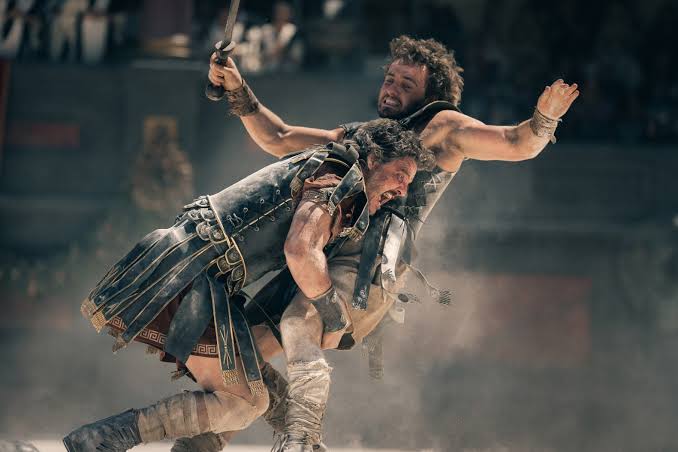
“My name is Maximus Decimus Meridius…”
Gladiator (2000) portrays Maximus as a leader whose communication is closely tied to action.
In the film's battle sequences, he gives instructions, coordinates people, and uses signals to communicate under pressure.
The broader lesson is highly relevant to executives.
High-stakes communication is not the moment to demonstrate how much you know. It is the moment to make the important information easy to understand and act upon.
Under pressure, people need to know:
What is happening?
What matters most?
What should I do?
Who owns the next step?
What happens if circumstances change?
Clarity becomes more valuable as complexity increases.
Leadership lesson: In high-pressure situations, reduce cognitive load. Give people the information they need to make the next correct decision.
9. Show Your Team How to Respond to Adversity: Rocky Balboa

“It ain’t about how hard you hit. It’s about how hard you can get hit and keep moving forward.”
Rocky Balboa (2006) frames resilience as the ability to absorb setbacks without allowing them to determine what happens next.
For leaders, resilience is not about pretending that difficult events do not matter.
It is about demonstrating what happens after they matter.
Teams watch how leaders respond when a major client leaves, a product launch fails, a target is missed, or a strategy produces an unexpected result.
A leader who responds with panic can spread panic.
A leader who denies the problem can destroy credibility.
A leader who acknowledges the setback, extracts the lesson, and establishes the next step gives the organization a way forward.
Leadership lesson: Your response to adversity teaches the team how adversity should be handled.
10. Learn How Not to Lead: The Devil Wears Prada

“By all means, move at a glacial pace. You know how that thrills me.”
Not every memorable movie leader is a model to emulate.
Miranda Priestly, played by Meryl Streep in The Devil Wears Prada (2006), is a useful case study in the difference between authority and leadership.
Her character is demanding, exacting, and highly influential. But her management style also demonstrates the organizational costs of withholding context, expecting people to infer requirements, and using fear as a primary management mechanism.
High standards are not the problem.
The problem is making people responsible for meeting standards they cannot reasonably understand.
Leaders can demand excellence while still providing clarity.
They can move quickly while communicating priorities, can even hold people accountable without making uncertainty or questions feel dangerous.
The distinction matters because fear can produce compliance without necessarily producing judgment.
Leadership lesson: High standards work best when people understand the standard, the priority, the context, and what good performance looks like.
What Movies Reveal About Leadership
These films come from very different worlds: professional sport, entrepreneurship, technology, superheroes, American football, sales, war, boxing, and fashion.
Yet the leadership problems they dramatize are surprisingly familiar.
How do you set the example or build the right team, how much authority should you keep, what should you delegate?
How do you communicate under pressure or respond when things go wrong?
How do you reward performance without rewarding the wrong behavior?
And perhaps most importantly: how do you create an environment in which people can perform without needing the leader to make every decision?
The 10 Leadership Lessons, in Practice
Lead by example. Your behavior communicates standards more powerfully than your instructions.
Remember the journey. Experience should increase perspective, not reduce empathy.
Make deliberate choices. Strategy is built through a sequence of decisions.
Build complementary teams. Look for capabilities that strengthen the whole team.
Empower people. Give people context and tools, then allow them to own outcomes.
Learn from others. Expertise is distributed across an organization.
Reward responsibly. Incentives shape culture, including unintended behavior.
Communicate clearly. The higher the stakes, the more important clarity becomes.
Model resilience. Teams learn how to respond to setbacks by watching their leaders.
Know what not to do. Authority without clarity can become fear, confusion, or dependency.
The Real Leadership Lesson
The most useful way to learn leadership from movies is not to ask which character is the "best" leader.
It is to watch what their behavior produces.
Remember this: Great leaders do not simply tell people what to do. They create the conditions in which people can understand the objective, exercise judgment, take ownership, learn from setbacks, and perform at a higher level.


Previous

Martin Luther King Jr. showed how powerful communication can turn a moral vision into collective action. His speeches reveal lasting lessons in leadership, persuasion, courage, and executive presence.
Next

Gallup's latest research shows that leaders often report better lives overall while experiencing significantly harder days. The difference highlights why leader engagement, not just employee engagement, has become a strategic leadership priority.