•
5 Mins Read




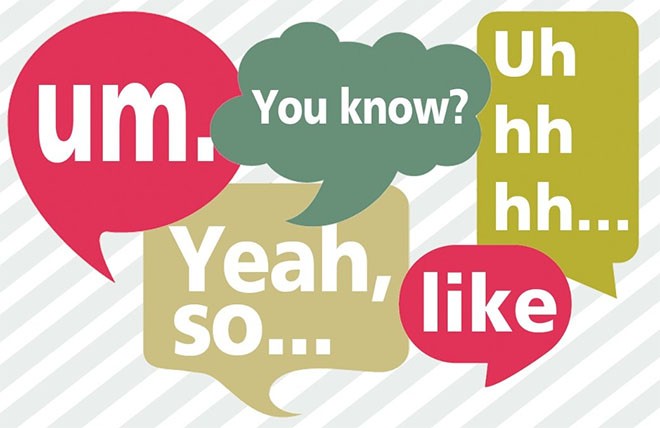
You listen to a recording of yourself and hear it: "so, um, basically, like, the main thing is..." Filler words are one of the most common things people want to fix about their speaking, and also one of the most misunderstood.
The goal isn't to eliminate every filler. It's to cut the excess, the habitual ones that distract listeners or signal that your thinking isn't organised, while replacing them with something more useful: silence.
The short answer: To stop saying um and like, record yourself to find your baseline and triggers, replace fillers with short pauses, prepare your openings and transitions, slow your pace slightly, and structure your answers so you know where you're going. Practise in low-stakes settings first.
In this article
What filler words are, and whether they're really bad
Why we use them
Seven steps to reduce filler words
A seven-day filler word plan
Hedging: the filler that costs more
Mistakes to avoid
Frequently asked questions
What filler words are, and whether they're really bad
Filler words are the sounds and short phrases that fill gaps in speech without adding content: um, uh, like, you know, so, right?, basically, kind of.
They're not meaningless. Linguists Herbert Clark and Jean Fox Tree analysed recordings of 50 conversations and argued that uh and um are real parts of English that signal a delay: uh a minor one and um a major one. Related research suggests listeners use these signals, and in some experiments fillers helped listeners recognise the next word faster.
So fillers aren't a sign of a flawed speaker. A few are natural. The problem arises when they become frequent enough to distract, to bury your point, or to make an otherwise well-prepared speaker sound unsure. That's what this guide helps you reduce.
Why we use them
Thinking time. We're planning the next phrase while talking.
Fear of silence. A pause of one second feels much longer to the speaker than to the listener.
Holding the floor. A filler signals "I'm not finished" and discourages interruption.
Habit. Phrases like like and you know get repeated until they're automatic.
Unstructured thinking. When you start a sentence without knowing where it ends, fillers fill the gap.
Understanding the cause matters because different causes need different fixes.
Seven steps to reduce filler words
1. Get your baseline
Record two minutes of yourself talking about your work, unscripted. Listen once and tally your fillers. Divide by the minutes to get a rate per minute. You don't need to compare it to any benchmark. The goal is to see your own number go down.
2. Find your triggers
Note when the fillers appear. Common triggers:
At the start of a sentence or answer
Between points when changing topics
When asked a difficult question
When listing items
When you're unsure of a fact
Most people discover that fillers cluster in two or three predictable spots, which makes them easier to fix.
3. Replace the filler with a pause
This is the core skill. When you feel an "um" coming, close your mouth, breathe, and stay silent for a beat. It will feel awkward at first. To the listener, a short pause sounds deliberate and gives them time to absorb what you just said. Swapping "um" for "so" or "right" doesn't help, because the habit just moves.
4. Prepare your openings and transitions
Fillers love the start of sentences and the joins between ideas. Prepare a few go-to phrases so you don't have to improvise those moments:
Opening: "The short answer is..."
Moving on: "The next point is..."
Summarising: "To sum up..."
Buying a beat: "Let me think about that for a second."
The last one is useful: saying it out loud is better than filling the gap with sounds.
5. Slow down slightly
Speaking too fast outruns your thinking and creates gaps that get filled with fillers. A slightly slower pace lets your thoughts keep up. See our guide on how to slow down when you speak for a method.
6. Structure your answers
If you know your first sentence and your last sentence, the middle is much easier. Use a simple frame such as answer first, then a reason, then an example. Our guides to giving an impromptu speech and to explaining complex ideas simply show how to build answers on the spot.
7. Practise with feedback
Record, review, repeat. A colleague, a coach or software that counts fillers for you can catch ones you've stopped hearing. Start in low-stakes settings, such as practice recordings, one-to-one chats and team stand-ups, before testing the new habit in a board meeting.
A seven-day filler word plan
Day | Focus | Task (5 to 10 minutes) |
1 | Baseline | Record two minutes, count fillers per minute |
2 | Triggers | Re-listen, mark where fillers cluster |
3 | Pause drill | Retell your baseline recording, replacing each filler with silence |
4 | Openings | Write and rehearse three opening and transition phrases |
5 | Structure | Answer three common questions using answer, reason, example |
6 | Real life | Pick one meeting to use pauses on purpose, then note how it went |
7 | Review | Record another two minutes and compare with Day 1 |
Hedging: the filler that costs more
Some of the most damaging fillers aren't sounds, they're softeners: I think maybe, sort of, just, kind of, does that make sense? A hedge now and then is honest. Habitual hedging makes firm statements sound uncertain. If you notice this pattern, our guide to sounding more authoritative when you speak shows how to cut them without sounding rigid.
Mistakes to avoid
Trying to reach zero. A few fillers are natural. Aim for fewer, not none.
Freezing. Going silent in the middle of a sentence because you fear saying "um" is worse than the filler.
Swapping one filler for another. Replace with a pause, not a different sound.
Self-criticism. Counting is for information, not punishment.
Not recording. You can't hear fillers while you're speaking, so playback is essential.
Frequently asked questions
Are filler words bad?
Not inherently. Research suggests that sounds like uh and um play a role in conversation. They become a problem when they're frequent enough to distract, hide your point or make you seem unprepared.
How many filler words is too many?
There's no universal threshold. A practical test is whether they pull attention away from your message. Track your own rate over time and aim for a clear drop.
Why do I say "like" so much?
It's a very common habit, and it can serve several purposes in speech, from marking approximation to introducing a quote. Habitual use usually responds to the same fix: notice it, pause instead, and practise.
How long does it take to reduce fillers?
Most people notice a drop within a couple of weeks of daily practice with recordings. Making it hold up under pressure takes longer.
Will pausing make me sound hesitant?
Short, controlled pauses usually sound confident. Hesitant pauses are the long, unplanned ones mid-sentence, which preparation and structure reduce.
Key takeaways
Record yourself to find your baseline and triggers.
Replace fillers with pauses. Don't swap them for other sounds.
Prepare openings and transitions, and structure your answers.
Slow down slightly so your thinking keeps pace.
Aim for fewer fillers, not zero.
Oraton's AI articulation coach tracks filler words and hedging along with pace and clarity, so you can see your progress session by session. For the bigger picture on clear speech, read our complete guide to articulation.
Sources
UC Santa Cruz Science Notes: Clara Moskowitz explains the meaning of "uh," "um" and "like"
Language Log (University of Pennsylvania): Another UH?, discussing Clark and Fox Tree (2002), Using uh and um in spontaneous speaking, Cognition
Related articles




Previous

Jacinda Ardern's pandemic leadership offers a lesson that extends far beyond COVID-19. In moments of uncertainty, trust, empathy, and shared purpose can matter as much as strategy itself.
Next

Learn 5 practical techniques to speak more clearly on video calls, from improving your microphone setup and pacing to using pauses, signposting, and fast repairs.