•
5 Mins Read.

Most advice on executive presence is about speaking: how to open, how to pace, how to answer. But watch senior people who are genuinely good in a room and you'll notice something else. They listen in a way that changes what everyone else says.
Listening is a presence skill, not a courtesy. This guide covers why it matters, what skilled listening sounds like, and seven techniques you can practise in your next meeting.
The short answer: Listening like a leader means working out what the speaker needs, resisting the urge to plan your reply, pausing before you respond, checking what you heard, asking questions that advance the conversation, and following up. It builds trust and makes everything you say next more relevant.
In this article
Why listening is part of executive presence
What leaders get wrong about listening
Seven techniques for listening like a leader
Listening in high-stakes settings
A one-week listening practice
Frequently asked questions
Why listening is part of executive presence
Duarte's guide to executive presence calls listening a major cornerstone of presence. It helps you track and respond to what speakers and audiences need, and it informs what you say, how you say it and when. Duarte's methodology, which it calls Adaptive Listening, starts from a speaker-first view: adjust how you listen to what the other person needs from you right now, whether that is support, help moving forward, full immersion or careful discernment.
Other sources agree that listening sits inside presence. MIT Sloan Executive Education's guide to building executive presence lists listening carefully and adjusting your message for different audiences among the habits of strong communicators. IMD's executive presence framework includes active listening in its definition of communication skills and places connection, the ability to relate to others with empathy, among its 7 C's.
There's also evidence that listening affects results. Research by Adam Grant, Francesca Gino and David Hofmann, summarised by Harvard Business School's Working Knowledge, found that teams with proactive employees performed better under leaders who listened carefully to suggestions and supported people's initiative than under more dominant leaders.
What leaders get wrong about listening
Treating it as waiting. Listening while mentally drafting your reply isn't listening.
Listening only for the problem to solve. Sometimes people need to be understood before they want solutions.
Fixing too fast. Jumping to the answer can signal that you've stopped hearing.
Multitasking. On calls especially, people can tell when you're half-present.
Hearing the words but missing the concern. In board and executive settings, the real question often sits underneath the literal one. See why the board wants implications, not numbers.
Seven techniques for listening like a leader
1. Ask yourself what this person needs from you
Before you respond, decide which kind of listening the moment calls for. Duarte's four styles are a useful prompt:
Support: the person needs to feel heard.
Advance: they want help moving something forward.
Immerse: they're thinking aloud and want you with them.
Discern: you need to weigh what they're saying carefully.
If you're unsure, ask: "Do you want my view, or do you mostly want to talk it through?"
2. Stop preparing your reply
Let the other person finish, and let the thought be complete before you begin yours. If your reply isn't ready, that's fine. A pause is better than an answer to the wrong question.
3. Pause before you respond
A one-second pause shows that you're considering what was said. It also stops you from answering the first thing you heard instead of the whole point. This is the same pause that helps with gravitas and tough questions.
4. Play back what you heard
Summarise in your own words and check: "So the concern is that the migration could slip past the launch date. Have I got that right?" Playback catches misunderstandings early and shows respect.
5. Ask a question that moves things forward
Open questions that build on what you heard work best: "What would make this easier to land?" "What's the part you're least sure about?" Avoid questions that are statements in disguise.
6. Listen for what isn't said
Notice hesitations, topics that get skipped and shifts in tone. In meetings, see who hasn't spoken. A quiet "What do you think?" to someone who has been silent often surfaces the most useful information.
7. Close the loop
Listening only counts if something happens afterwards. Follow up on what you committed to, and tell people what you did with their input, even when the answer is no. Consistency here builds the predictability that keeps people listening to you in turn. Our piece on why employees stop listening when predictability breaks explores this.
Listening in high-stakes settings
Board meetings. Hear the question under the question, then answer that. Restate it in neutral terms before you respond. See how to answer tough board questions.
Difficult conversations. Let the other person finish, name the emotion you hear, and resist defending yourself immediately. Rehearse these in advance with our guide to practising a difficult conversation as a leader.
Video calls. Lag makes overlaps more likely, so leave a beat after people finish and keep your own microphone muted when you aren't speaking. See how to speak clearly on video calls.
Different leadership styles. What good listening looks like depends on the situation and the person. Our guides to Goleman's six leadership styles and the Hersey-Blanchard model help you adapt.
A one-week listening practice
Day | Practice |
Monday | In one meeting, wait a full second before answering every question |
Tuesday | Play back what you heard in two conversations before responding |
Wednesday | Ask one open question that builds on someone else's point |
Thursday | Notice who hasn't spoken, and invite them in once |
Friday | Follow up on one thing someone told you this week |
Weekend | Review: what did you learn that you'd have missed otherwise? |
Frequently asked questions
Why is listening part of executive presence?
Because presence is how others experience you, and people feel most respected when they're heard. Listening also makes what you say more relevant, which raises your credibility.
How do I stop interrupting?
Count a silent beat after the other person finishes before you speak. If you interrupt out of enthusiasm, say so: "Sorry, I'm keen on this. Let me hear the rest."
Can introverts be better listeners?
Research suggests introverted leaders are more likely to listen carefully to proactive team members, but listening is a trainable skill for everyone. See executive presence for introverts.
How do I listen better on video calls?
Close other windows, look at the camera or the speaker's tile, and keep your own sound muted. Leave a longer pause than feels natural before replying.
How do I show I'm listening without saying much?
Use brief acknowledgement, steady eye contact, playback and good follow-up questions. Action afterwards is the strongest proof.
Key takeaways
Listening is a presence skill that shapes trust and relevance.
Decide what the speaker needs, and stop planning your reply.
Pause, play back what you heard, and ask forward-moving questions.
Listen for what isn't said, especially in senior settings.
Close the loop: follow up and show what you did with the input.
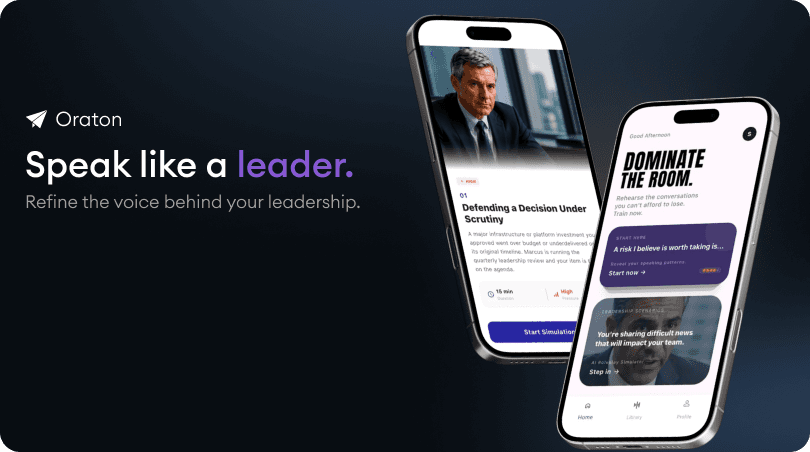
To rehearse conversations where listening matters, try Oraton's AI articulation coach and practise realistic scenarios privately. For the speaking side, read our complete guide to articulation.
Sources
Duarte: What is executive presence?
MIT Sloan Executive Education: Building executive presence in today's workplace
IMD: 7 executive presence coaching techniques you need to know
Harvard Business School Working Knowledge: Introverts: the best leaders for proactive employees
Related articles