•
4 Mins Read.




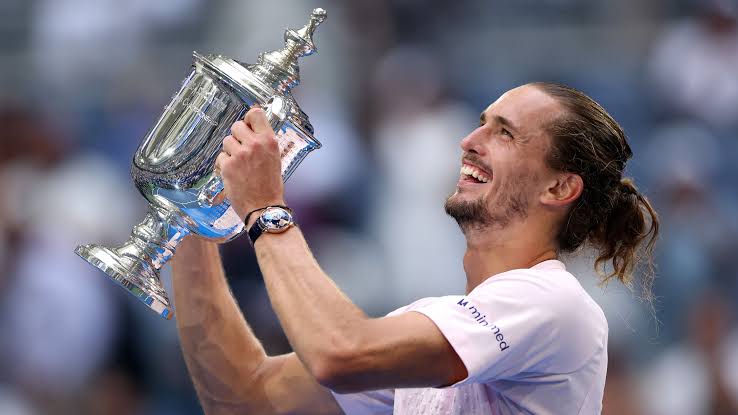
Zverev's response was strikingly measured. He acknowledged that, at that moment, he could make the case. But he also pointed to the injuries that had affected Jannik Sinner and Carlos Alcaraz. More importantly, he did not use his victory to rewrite what he believed about his own level.
“I don't know how to answer that,” he said. Zverev went on to explain that when Sinner and Alcaraz were healthy and playing at their best, he did not consider himself the best player in the world. “4 or 5 months ago when both of them were healthy, I wasn't. I was losing to Jannik all the time.”
Then he made the point even more directly: “If everyone is healthy, I think Jannik is still ahead. It's as simple as that.”
For an executive, there is something useful in that answer.
Zverev did not diminish his achievement. He had won the US Open. He had gone 25–2 at Grand Slam tournaments that year and moved 700 points clear of Sinner in the PIF ATP Live Race To Turin. But he also resisted the temptation to turn one outcome into a sweeping conclusion about his superiority.
That is a distinction leaders regularly have to make. A successful quarter does not necessarily prove that the strategy was right. A deal closing does not mean every assumption behind it was sound. A decision producing a good outcome does not mean the decision was obvious when it was made.
Good executive communication preserves those distinctions.
Before the US Open, there was another verdict to resist
Zverev's story becomes more interesting when placed alongside something he said about his childhood.
He was diagnosed with Type 1 diabetes when he was four years old. According to Zverev, doctors told his family that his life and sporting prospects would be severely limited and that becoming a professional athlete might not be possible.
His mother refused to accept that as the final word.
Zverev recalled what it meant for a parent to hear that about a four-year-old who wanted to become an athlete. “When your 4-year-old son gets diagnosed with diabetes, and doctors in the office tell you that life and sports will be very, very limited for that child,” he said, “it takes a very, very strong mother to walk out of those offices and say, ‘My son will be wherever he wants to be.’”
He described the principle behind her support simply: “If he wants to be a tennis player, he'll be a tennis player. If he wants to do something else, he'll do something else. But this illness will not define us.”
That is not a story about pretending obstacles do not exist. The obstacle was real. The diagnosis was real. The uncertainty was real.
What his mother refused to accept was that the obstacle had already determined the outcome.
What leaders can take from the two moments
The two parts of Zverev's story sit almost opposite each other.
As a child, he had someone who refused to let an external judgment become a ceiling on his future.
As a champion, he refused to let a major victory become an excuse for overstating his present position.
That combination is useful in leadership. Teams need people who can look at a difficult situation and ask whether the constraints being described are actually fixed. They also need leaders who, after a success, can look back at the result without turning it into a flattering but inaccurate story.
Zverev's comments after the US Open are particularly relevant because senior leaders constantly operate in situations where the evidence is incomplete. They have to communicate what happened without pretending they know more than they do.
Sometimes the strongest answer in a leadership room is not, “We proved we were right.”
It is closer to Zverev's answer:
This worked. Here is why. Here is what was outside our control. And here is what I still believe could be different under different circumstances.
That is a much harder message to deliver than a victory speech.
And it is often a much more credible one.
Zverev's US Open title is the headline. But the more interesting leadership lesson may be in what he said after winning it, and in the person who, years earlier, taught him not to let someone else's verdict decide what he could become.
Previous

Yahoo's biggest mistake wasn't hiring Marissa Mayer. It was misdiagnosing the challenge she was being asked to solve.
Next

Why do some brands, organizations, and traditions survive for generations while others fade away? The answer may have less to do with content and more to do with creating a shared sense of identity.