•
6 Mins Read.





Key Summary
Reinvention starts with accountability, not reputation management. Alex Rodriguez's comeback began when he stopped controlling the narrative around his suspension and started openly owning his role in what happened.
Long-term leadership is built through generosity, relationships, and continuous learning. His “10 touches” and “90% rule” reflect a philosophy of prioritizing trust over short-term optimization, while his daily commitment to learning keeps failure from becoming repetition.
The real comeback happens before anyone notices it. Rodriguez's story suggests that failure becomes valuable only when it changes how you operate: own what happened, study it, build stronger relationships, and make the next decision differently.
Alex Rodriguez's leadership story is less about baseball than it is about what happens after the version of yourself that once worked no longer does. At YPO's Global Business Summit, Rodriguez spoke openly about growing up with financial hardship, reaching the highest levels of professional sport, falling publicly, and then spending years rebuilding his reputation and career. His story is ultimately about reinvention, but the more interesting part is what he believes makes reinvention possible: accountability, generosity, learning and the willingness to keep going after failure.
Own the failure before you can rebuild
Rodriguez does not treat his suspension for performance-enhancing drugs as an uncomfortable footnote in his career. He describes it as the event that forced him to confront how he thought about responsibility and leadership. During the year he was away from baseball, he entered therapy and began what he describes as an effort to “rewire” himself.
The rebuilding process began with something surprisingly simple: saying the difficult thing first. In meetings, Rodriguez would address the suspension before others had to raise it. He also personally called a dozen longtime supporters to acknowledge what he had done. Some of those relationships, he says, ultimately became stronger because the conversations were direct.
That spoke to us.
Reputation is not rebuilt by controlling the narrative around failure. It is rebuilt by becoming willing to own the part of the story that is yours.
Rodriguez puts the distinction bluntly: “When things are great, you can take a step back and let your team get all the credit. But when things are bad, that’s when leadership stands up.”
Build relationships before you need them

Rodriguez's approach to business is similarly relationship-driven. Before a meeting, he studies the person he is about to meet, including what they want, what they are struggling with and what they are trying to accomplish. Rather than beginning with what he wants from the relationship, he often starts with a different question: How can I help you win?
That philosophy sits behind what he calls the “10 touches” rule. The idea is to create meaningful interactions before asking someone for something. A conversation, an introduction, a useful book or a coffee may seem insignificant individually, but repeated acts of generosity create a relationship that does not begin with a transaction.
His “90% rule” takes the same idea into negotiation. If a deal is worth 10 dollars, he would rather take nine and leave the other party with the feeling that they received a fair outcome than maximise the transaction for himself.
The economics of any individual deal may be debatable. The leadership principle is clearer: long-term trust can be more valuable than short-term optimisation.
Rodriguez summarises that philosophy in six words: “Integrity never takes a holiday.”
Failure becomes useful when you study it
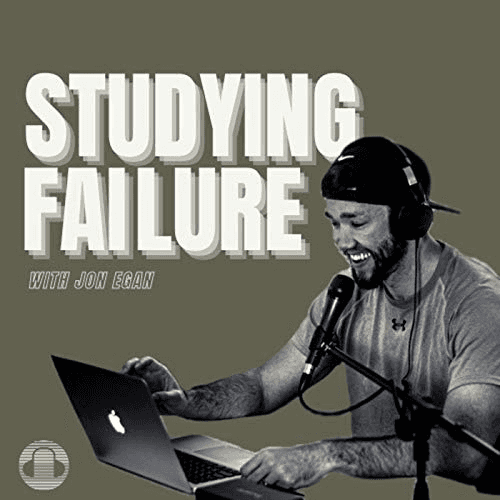
Rodriguez jokes that he has “a Ph.D. in failure” and “a master’s in getting back up.”
Note that line. It works because his career contains both extraordinary achievement and extraordinary setbacks. He made 14 All-Star appearances and became one of the most accomplished players of his generation, while also accumulating one of the highest strikeout totals in Major League Baseball history.
For Rodriguez, those facts belong in the same story, as, you see, failure is not evidence that the previous attempt was meaningless. It is information about what needs to change before the following attempt.
That mindset now carries into his business life as well. He says he studies for five to six hours a day, treating learning not as something required early in a career but as an ongoing discipline. When something goes wrong, his response is to examine it, learn from it and continue.
“You’re going to fall, you’re going to fail … but you have to keep getting back up.”
Reinvention requires a different relationship with the past
The easiest response to a major setback is often to distance yourself from it. Rodriguez's approach is almost the opposite.
He uses the experience as part of his leadership education.
That is important because reinvention does not necessarily mean becoming someone completely different. Sometimes it means understanding the weaknesses, decisions and behaviours that contributed to an earlier chapter and refusing to repeat them in the next one.
For executives, that distinction matters. A failed acquisition, a damaged relationship, a poor hire or a public mistake can become either an identity or an education.
The difference is what happens afterwards.
Do you defend the decision?
Do you blame the circumstances?
Do you try to move on quickly?
Or do you examine what happened closely enough that the experience actually changes how you operate?
The leadership lesson?
Rodriguez's story ultimately comes down to a sequence that is useful well beyond sport.
Own what happened. Learn from it. Invest in relationships. Keep practising. Then make the next decision differently.
The impressive part of reinvention is rarely the comeback itself.
It is the work that happens before anyone is willing to call it a comeback.
For Rodriguez, the next chapter was not created by erasing the previous one. It was created by taking responsibility for it and deciding that it would not be the final definition of who he became.
Adios!
Until Next Time!

Previous

America's founders distrusted speed as much as modern organizations celebrate it. Their approach offers a timeless lesson about why friction, disagreement, and deliberate decision-making can be essential to long-term resilience.
Next

Adaptability only matters after leaders recognize that something has changed. The organizations that thrive are often distinguished not by their ability to pivot, but by their ability to notice what others ignore.