•
5 Mins Read





Ever wondered what separates executives who simply hold senior titles from those who genuinely look, sound and act like leaders? From the way they present themselves to the way they handle pressure and communicate their ideas, effective leaders project signals that influence how others perceive their authority and credibility.

Have you ever wondered what makes someone look like an executive?
If you have, you have probably noticed a few things about people who seem to command a room.
First, they look the part. Whatever environment they operate in, from a startup office to a Fortune 100 boardroom, they understand how to present themselves in a way that signals that they belong there. They also carry themselves with confidence. Their posture, composure and behavior suggest that they are comfortable taking responsibility. Finally, they speak with authority. Their communication is clear, deliberate and self-assured.
These are not superficial details. They are signals.
We often describe the combination as executive presence: the ability to project confidence, credibility and composure while demonstrating that you can take control of difficult or unpredictable situations, make sound decisions under pressure and hold your own among capable, strong-willed people.
So let’s take a quick tour of the ABCs of executive presence.
Appearance
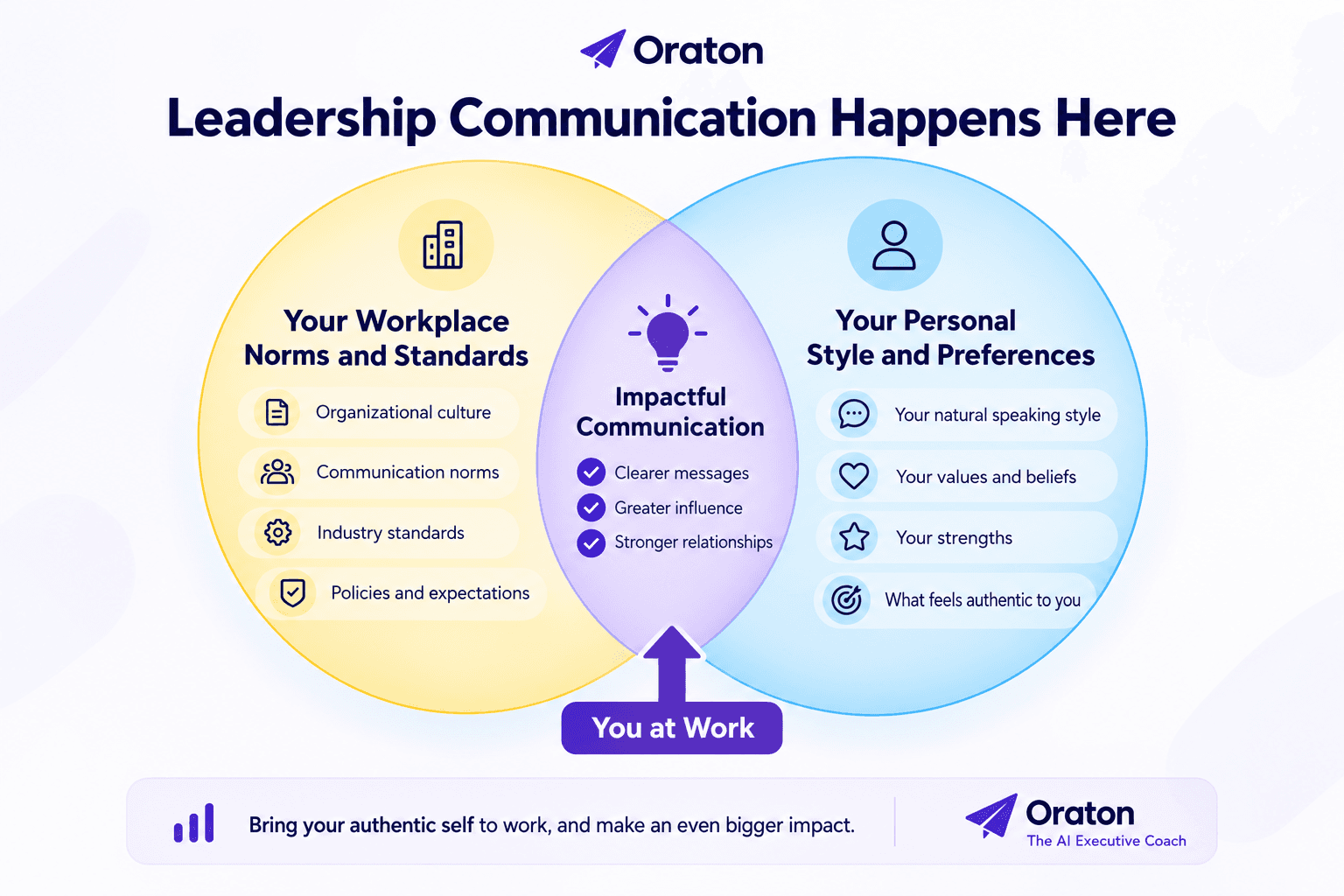
Appearance is how you present yourself at work through your clothing, grooming and body language.
Workplace standards have changed considerably, particularly with the rise of remote and hybrid work. But every organization still has expectations about how people show up. Sometimes those expectations are formal. Sometimes they are almost entirely unspoken.
The important thing is to understand the environment before deciding how you want to present yourself.
If everyone at your athletic apparel company wears hoodies, jeans and sneakers, arriving every day in a blazer and formal dress shoes may communicate something you did not intend. You may be trying to signal professionalism, but others may read it as a failure to understand the culture.
That does not mean you should simply copy everyone around you. Executive presence is not about disappearing into the crowd. It is about understanding the norms well enough to make deliberate choices about when to fit in and when to stand out.
Your appearance should support your professional identity rather than compete with it.
Take time to consider the signals you are sending through your clothes, grooming, posture and physical presence. The goal is not to create a perfect image. It is to make sure the image you project is consistent with the role you want others to see you playing.
Boldness
Boldness is the ability to remain calm, courageous and self-assured, particularly when the pressure rises.
It is not the same as being loud, aggressive or overly confident. In fact, some of the most powerful displays of executive presence are remarkably quiet.
The foundation of boldness is credibility. People are more willing to trust someone who demonstrates both competence and confidence in their ability to handle what comes next.
This is why confidence matters so much in leadership. A leader does not need to know exactly how every situation will unfold. They need to give people confidence that they can navigate uncertainty, make decisions and respond when things do not go according to plan.
As leadership author Peter Bregman points out in his Harvard Business Review article of the same name, great leaders are “confident, connected, committed and courageous.” These qualities capture much of what we mean by boldness.
Executive presence is often most visible when circumstances are least certain. When everyone else becomes reactive, the leader who can slow down, assess the situation and respond deliberately sends a powerful signal.
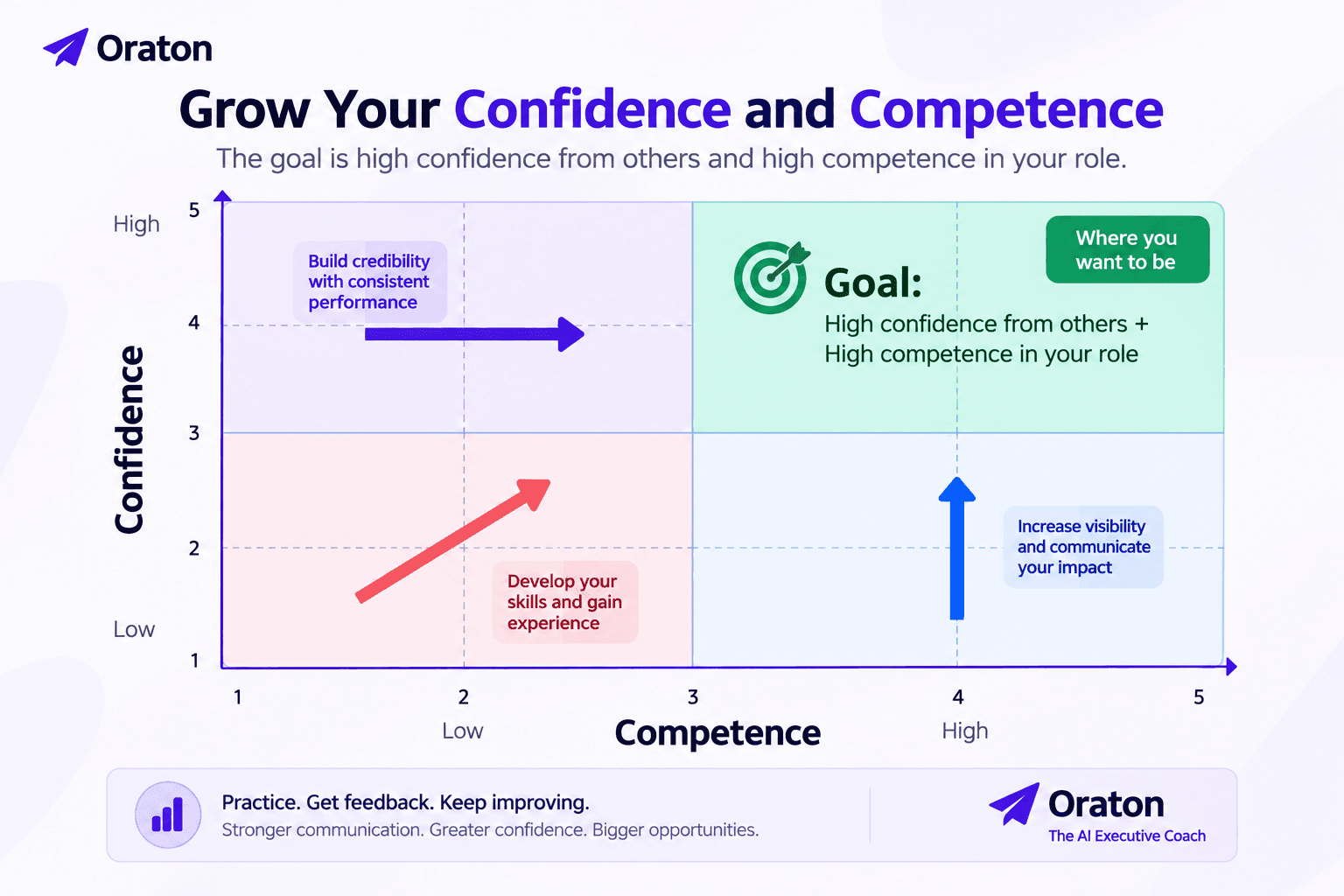
Adapted from Conger, J., Developing leadership capability: what’s inside the black box?, The Academy of Management Executive (1993-2005) Vol. 18, No. 3 (Aug., 2004), pp. 136-139 (4 pages)
Communication
Communication is how you express your ideas, make decisions, handle questions and present yourself when speaking with others.
For leaders, communication is one of the most important components of executive presence because people often experience leadership through language.
According to Brown University Distinguished Senior Lecturer Barbara Tannenbaum, “Communication is the skill that makes good leaders great.”
You do not need to be a naturally gifted speaker to develop this skill. Like any other leadership capability, communication improves with deliberate practice.
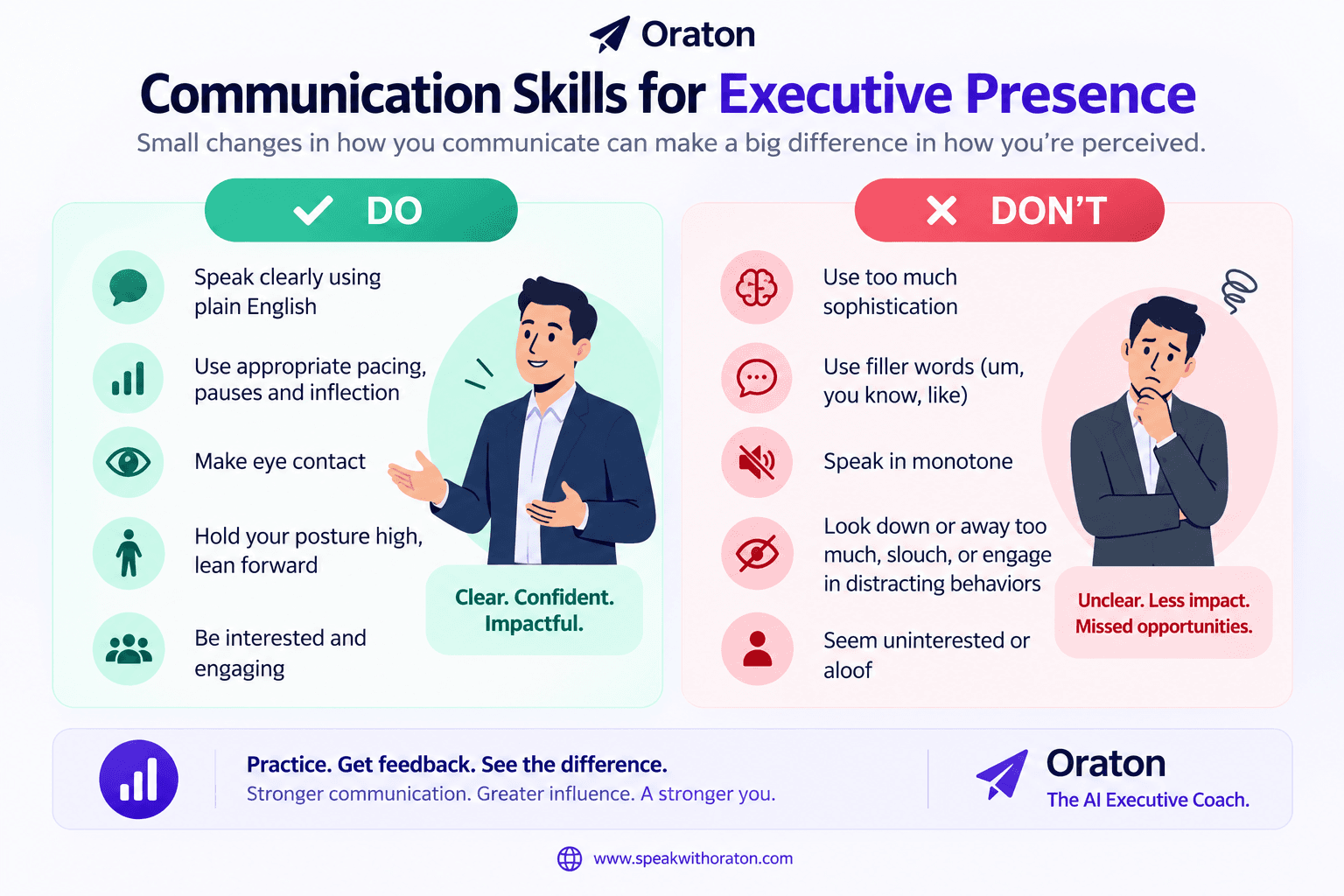
Seasoned executives tend to sound composed because they make their words work for them. They speak clearly, avoid unnecessary filler and use pace, tone and emphasis to make important ideas easier to follow. They know when to explain, when to be concise and when to pause.
Authority is not created by using complicated words or speaking constantly. Often, it comes from being precise about what you know, what you believe and what you intend to do.
Some of the most effective communicators also understand that delivery matters as much as content. Their voice, facial expressions, posture and pauses reinforce the message rather than distract from it.
💡Tip: Record yourself delivering a presentation or explaining an important idea on the Oraton App. Listen for filler words such as “um,” “you know” and “like.” Pay attention to your pace, vocal variety and moments where your confidence drops. Then practice the same message again with greater control.
Action steps
1. Assess your personal brand, ask someone you trust to give you honest feedback
2. Identify one or two changes that would strengthen your executive presence
3. Practice those changes deliberately and follow through
Download the Oraton App and practice your presence before the board room forgets you.